Why Analyze Your Gas Before Every Dive?
Among divers, there is one simple rule: never assume what is inside a cylinder. Whether you dive with air, nitrox, or trimix, gas analysis before a dive is one of the most important safety procedures.
Many divers trust the filling station and its quality control procedures, but the final responsibility always lies with the diver. Even a small deviation in oxygen content can affect the maximum operating depth, while an incorrect trimix composition can lead to inaccurate decompression planning.
What Do We Check During Gas Analysis?
For recreational nitrox diving, divers typically verify the oxygen content (O₂). This information is essential for calculating the Maximum Operating Depth (MOD) and planning a safe dive.
In technical diving, helium (He) analysis is equally important, as it directly affects narcosis management and decompression calculations.
Increasing attention is also being given to carbon monoxide (CO) monitoring. Carbon monoxide is an extremely dangerous gas that may be present due to issues during cylinder filling, yet it cannot be detected by smell or taste.
How Is Gas Analysis Performed?
The process is quick and straightforward. The analyzer is connected to the cylinder valve, a steady gas flow is established, and the readings are allowed to stabilize. After a few seconds, the gas composition can be recorded and the cylinder properly labeled.
The entire procedure usually takes less than a minute, but it can help prevent serious problems underwater.

The New Generation of Divesoft ECHO Gas Analyzers
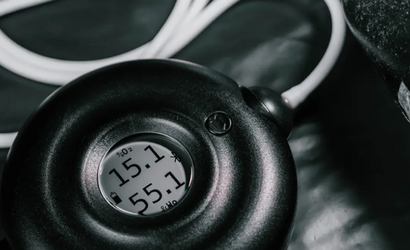
Recent developments in diving equipment have brought significant improvements in gas analysis technology. One of the most interesting innovations is the Divesoft ECHO series, which combines oxygen, helium, and carbon monoxide analysis in a single compact device.
These analyzers are designed for recreational and technical divers, as well as dive centers that require fast and reliable gas verification.
A key feature of the ECHO range is the Solid State version, which uses advanced oxygen sensing technology without a traditional galvanic oxygen sensor. This approach provides longer sensor life, greater stability, and reduced maintenance requirements.
For users seeking even more consistent measurements, ECHO models are also available with a Flow Limiter, ensuring an optimal gas flow through the analyzer.

A Small Habit That Improves Safety
Gas analysis has become a standard part of dive preparation. It takes only a few moments but provides divers with reliable information for planning and conducting safe dives.
Regardless of your experience level or diving style, one rule always remains the same: always verify what you are breathing before entering the water.